| Weight | 1.010 kg |
|---|---|
| Volume | Approx. 400 ml |
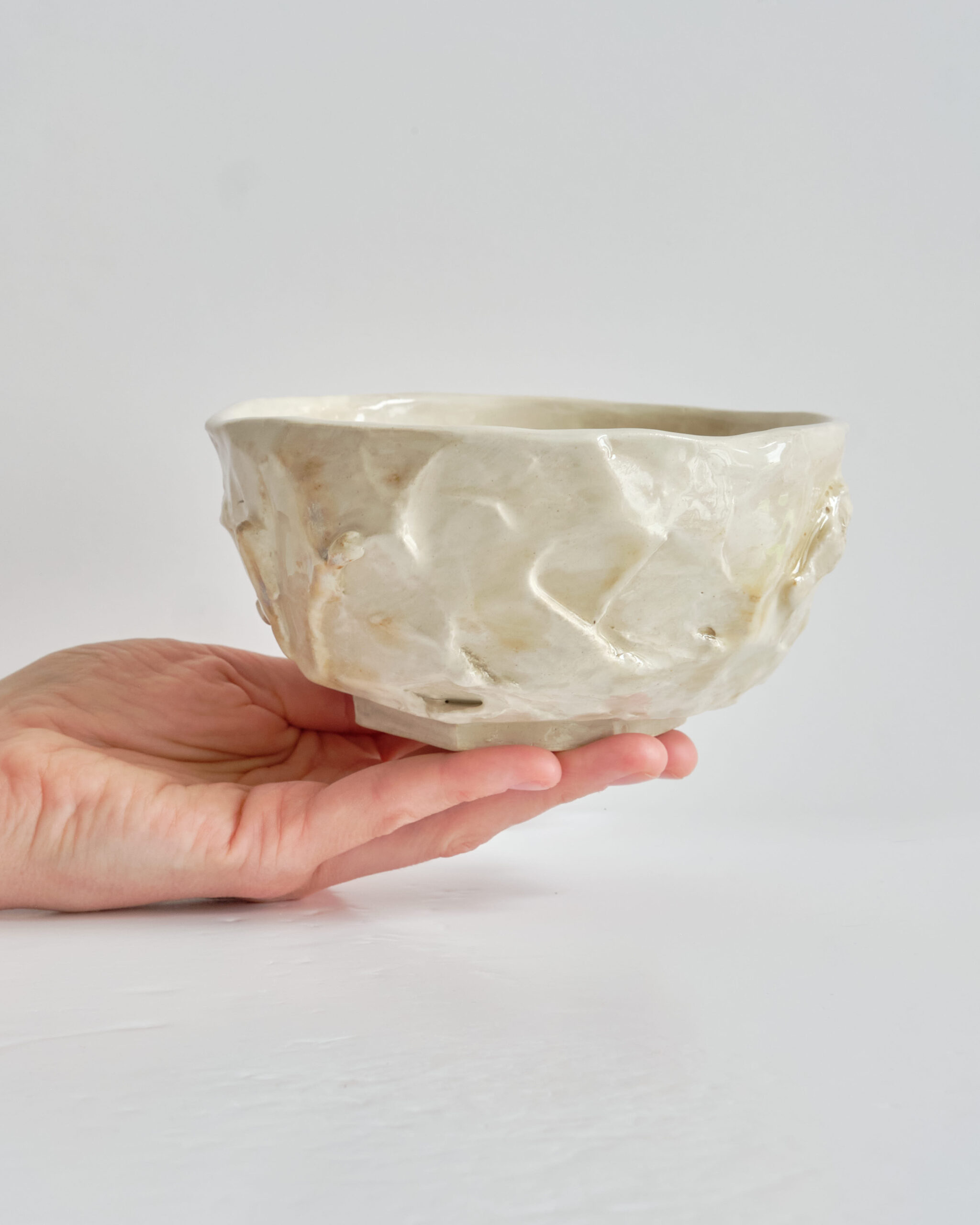
| Dimensions | Diameter 14 cm, height 7 cm (incl. approx. 0.5 cm foot) |
| Materials | High-fired stoneware clay |
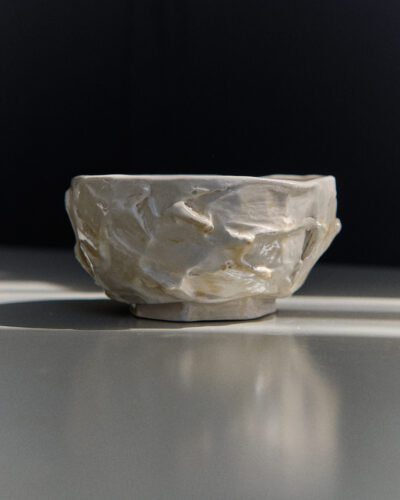
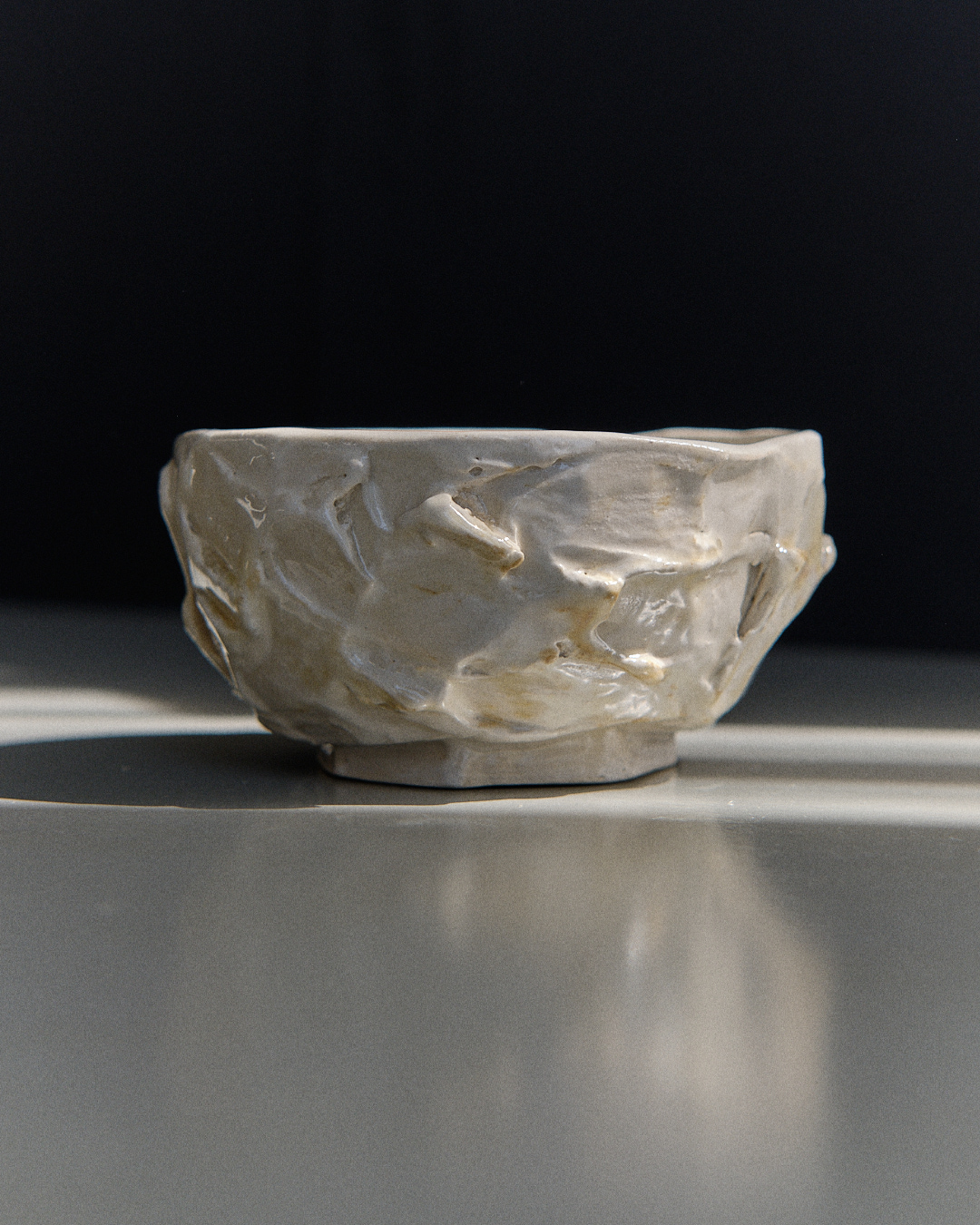
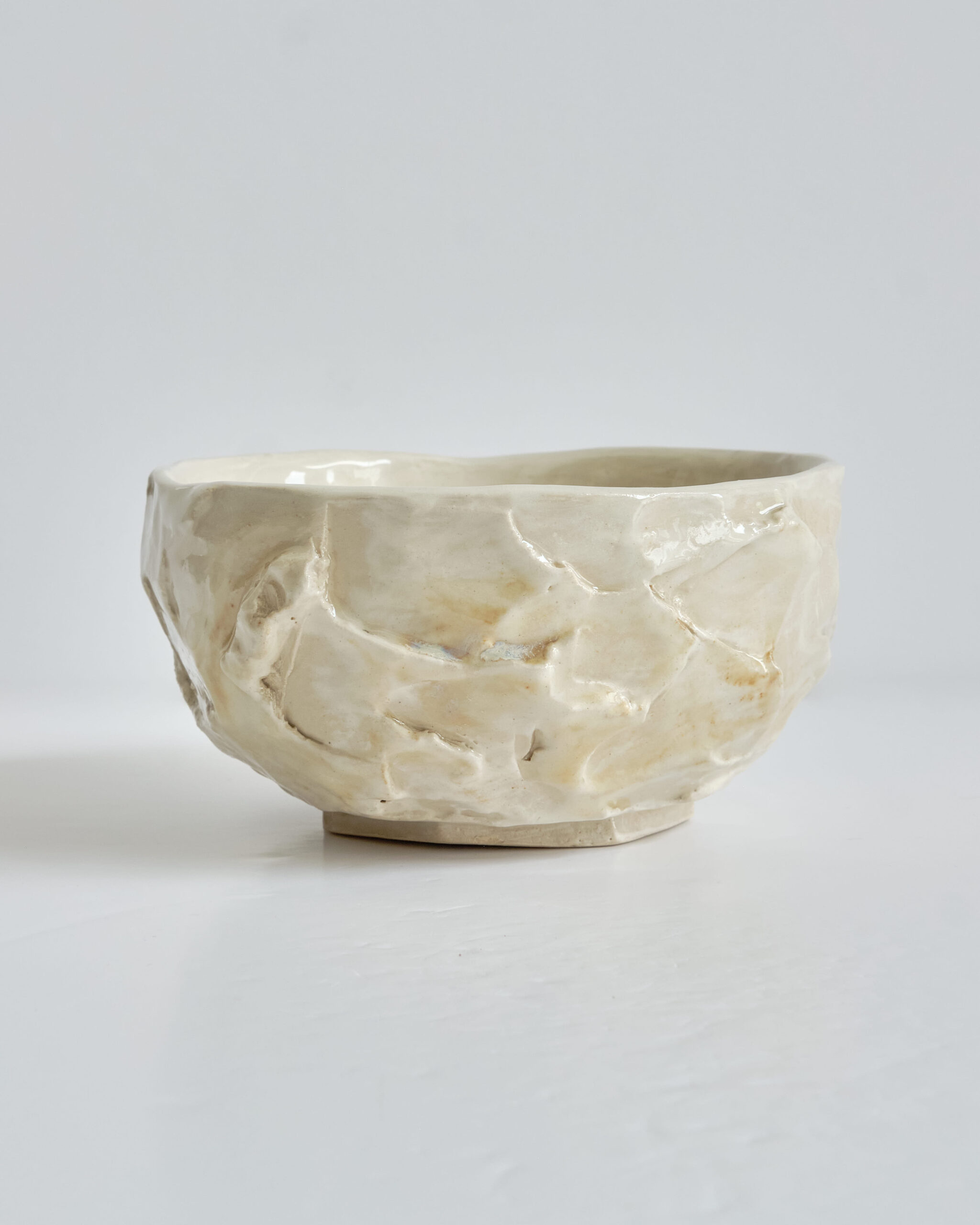
| Finish | Fully glazed, glossy, off-white with pearlescent tones |
| Product care | Ondou pieces are crafted as functional art objects. While made from high-fired stoneware fired to 1220 °C — which makes them highly durable and resistant to everyday wear — they are still ceramic and can break if dropped or subjected to strong impact. With proper care, they will last for many years. OPTIONAL DEEP CARE |
| Dishwasher use | Hand-washing is recommended. Dishwashers and harsh detergents won't break the item itself, but they can soften or wear down the decoration/glaze and alter its original finish. |
| Microwave use | Not recommended – clay is a highly conductive material and the piece will become very hot to the touch. |
| Handmade nature | Each item is handmade and shows the marks of this process, including intentional “imperfections.” Colors may also appear differently depending on lighting conditions and your screen. |
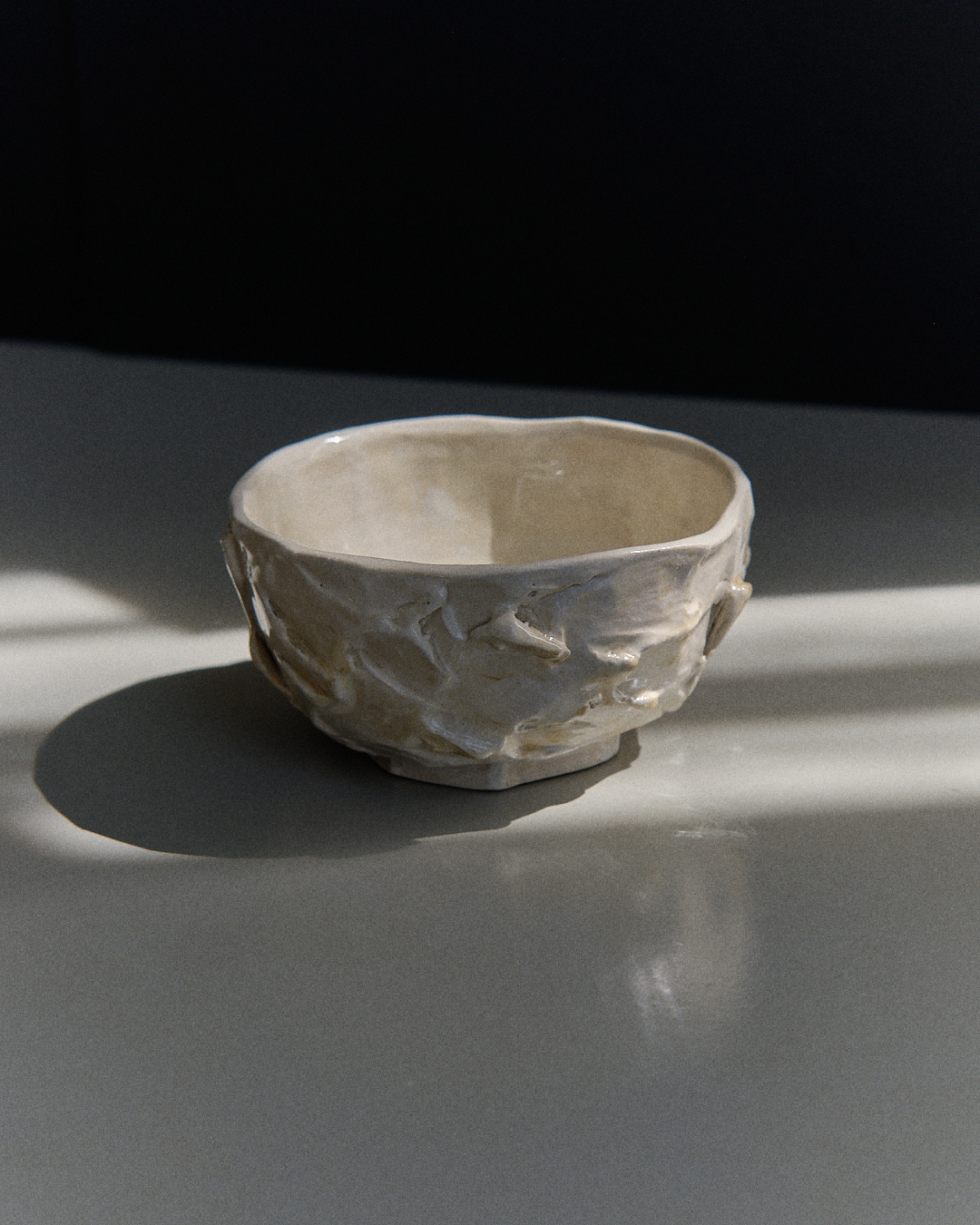
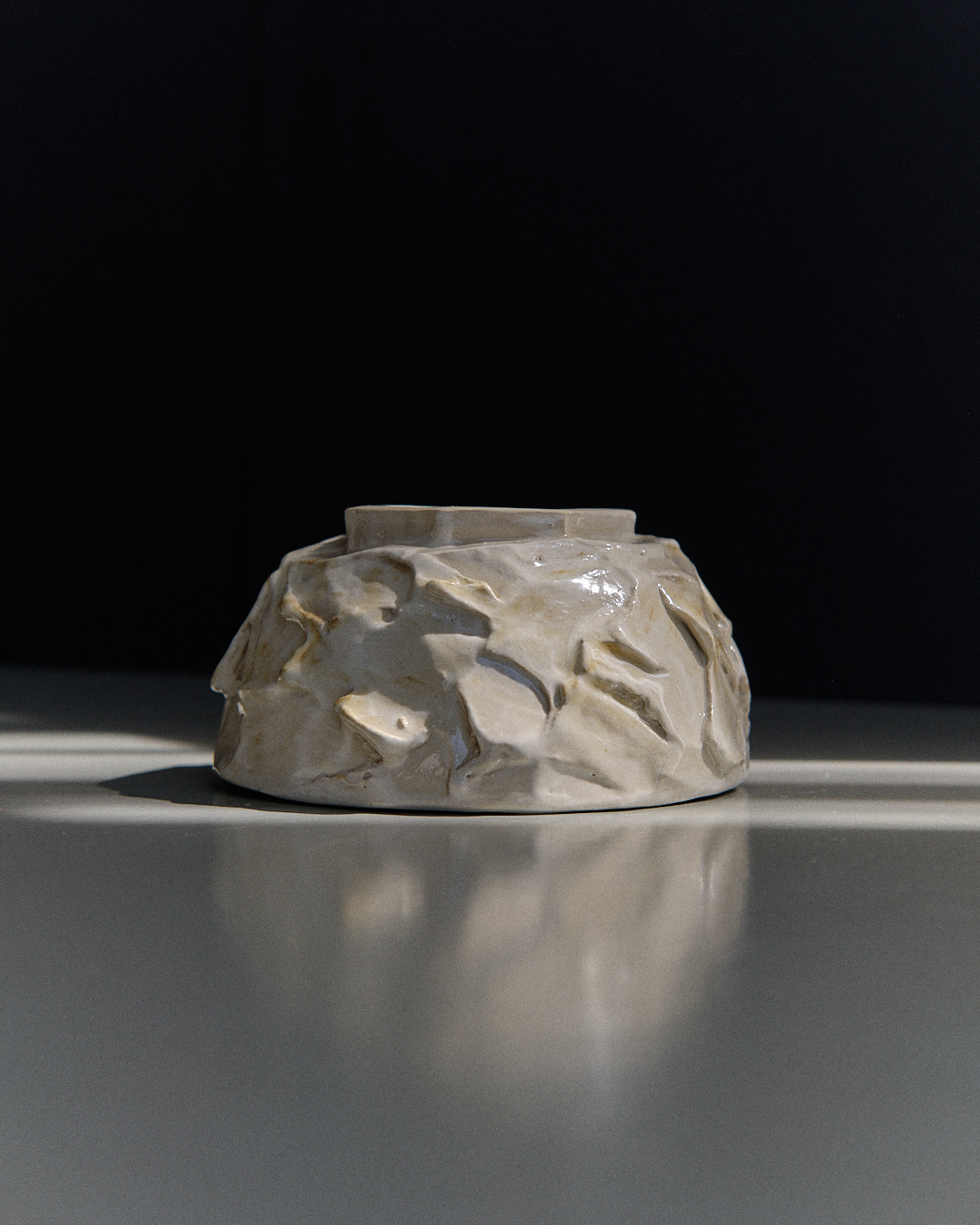
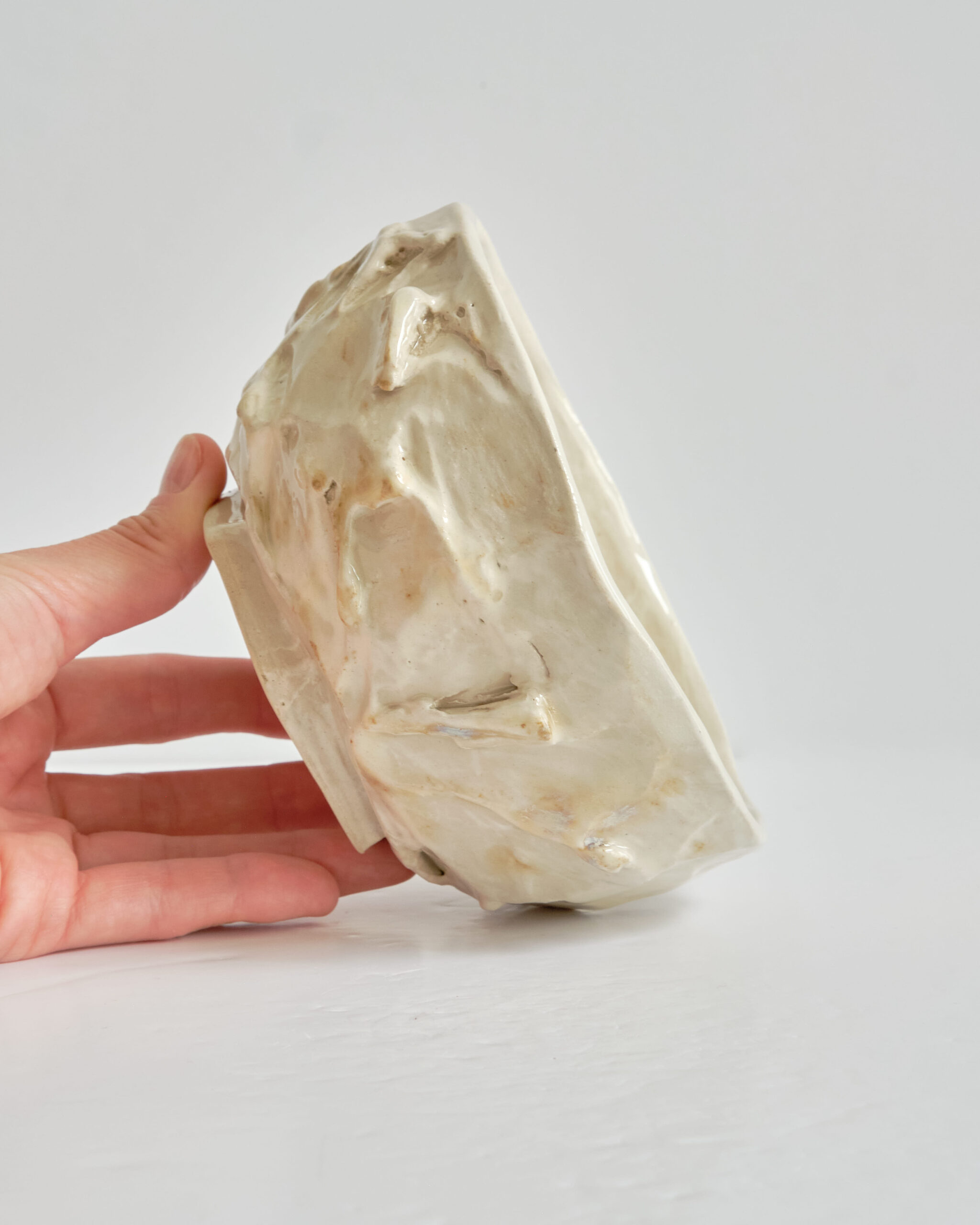
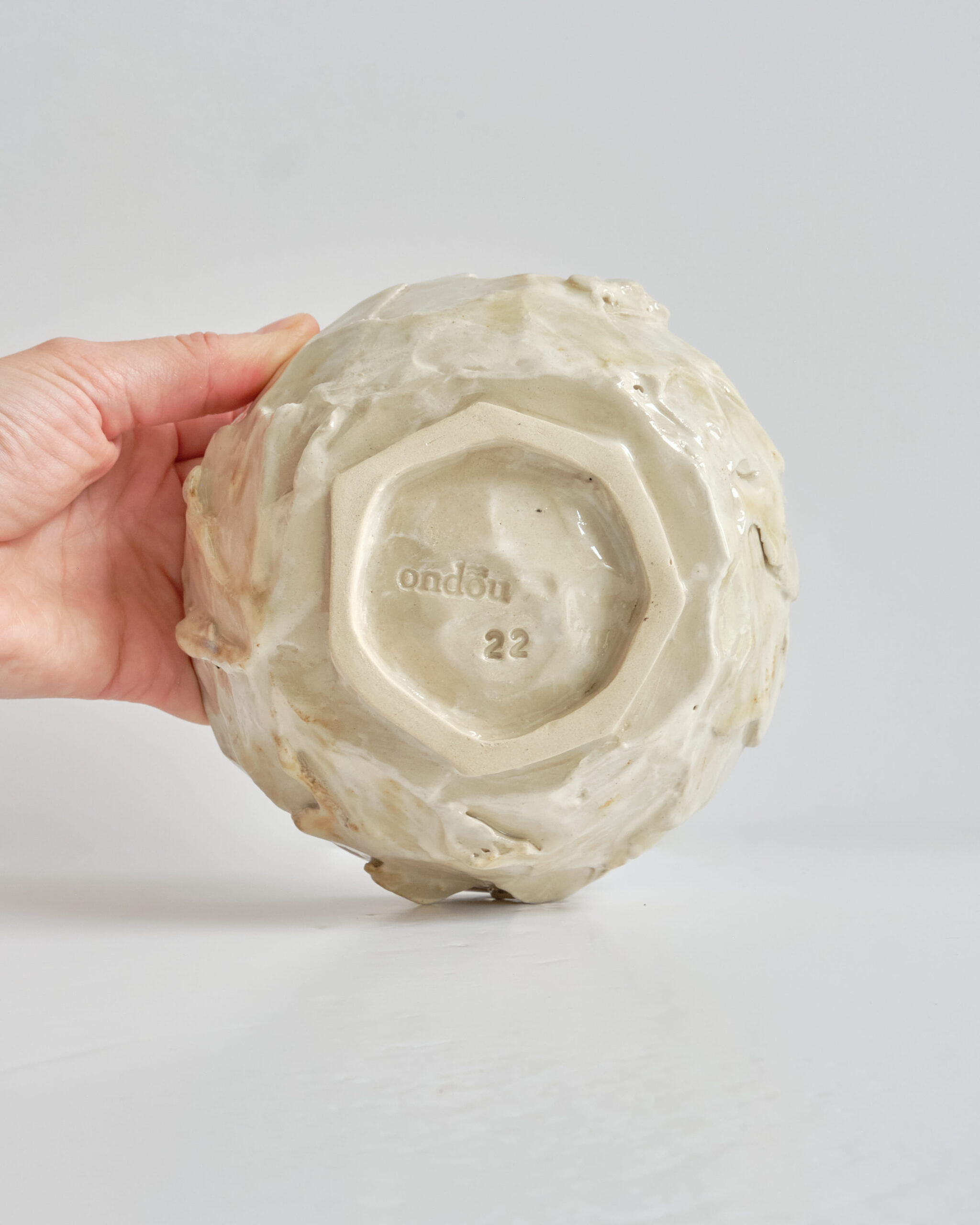
Kurinuki Matcha Bowl Nº22
€120.00
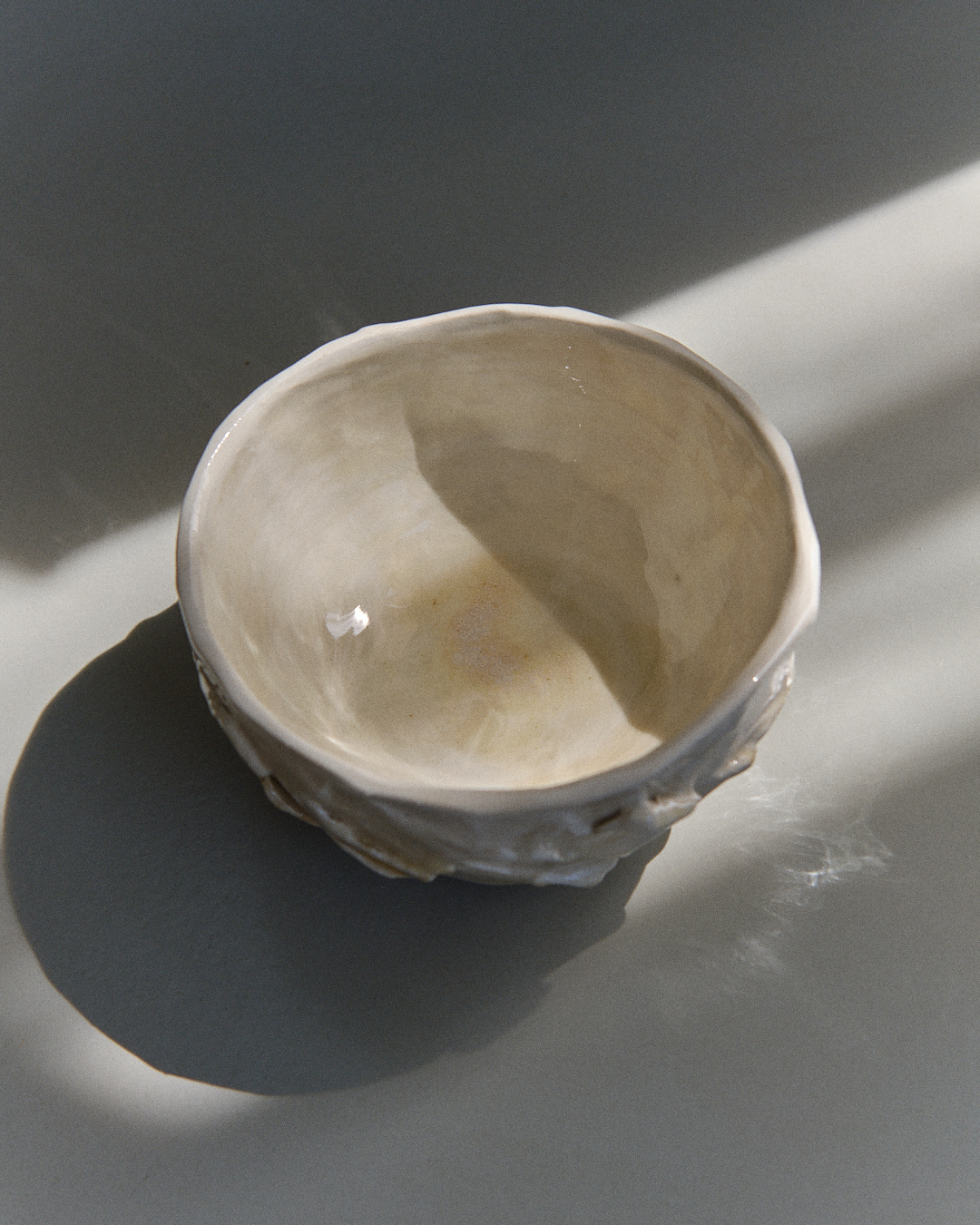
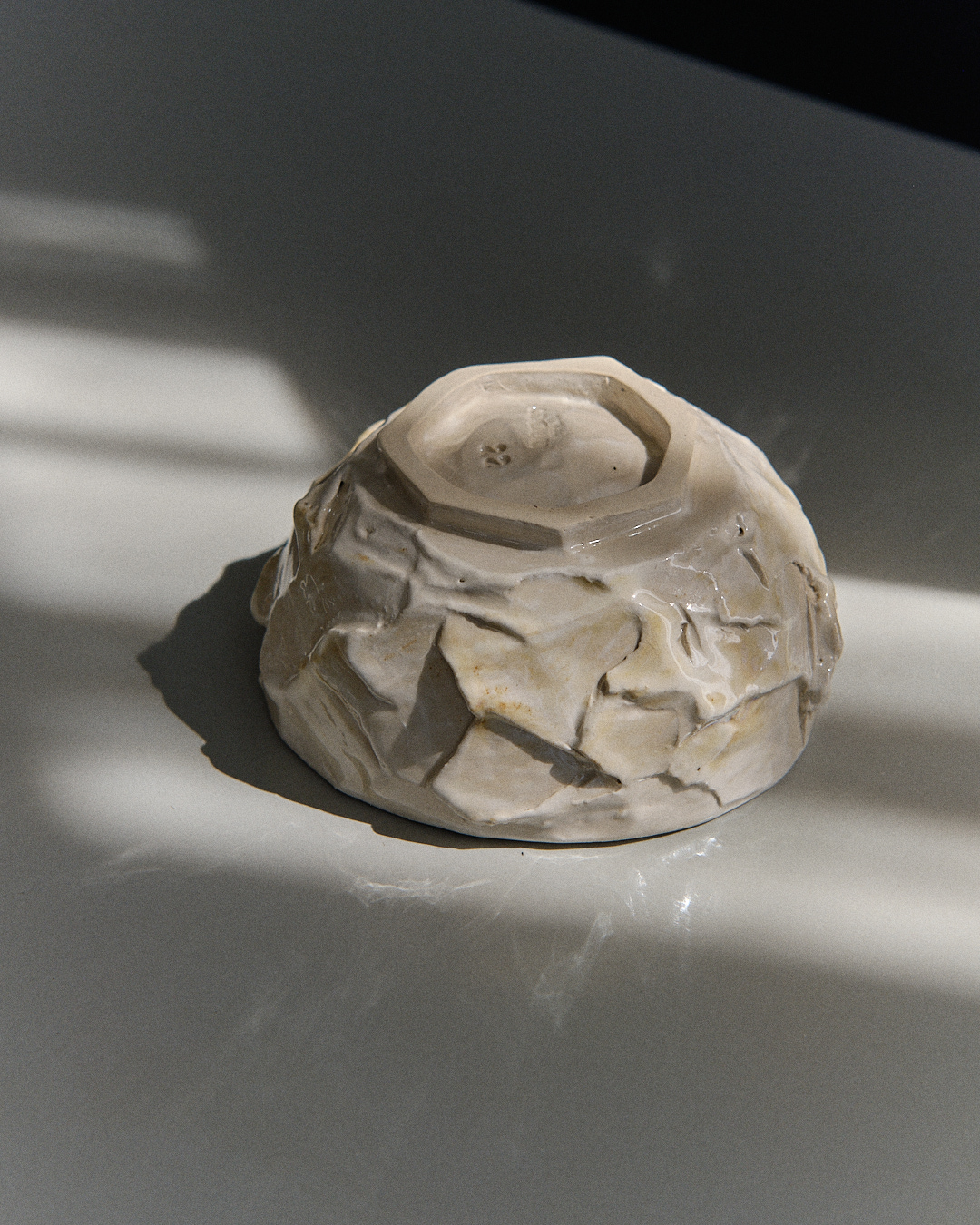
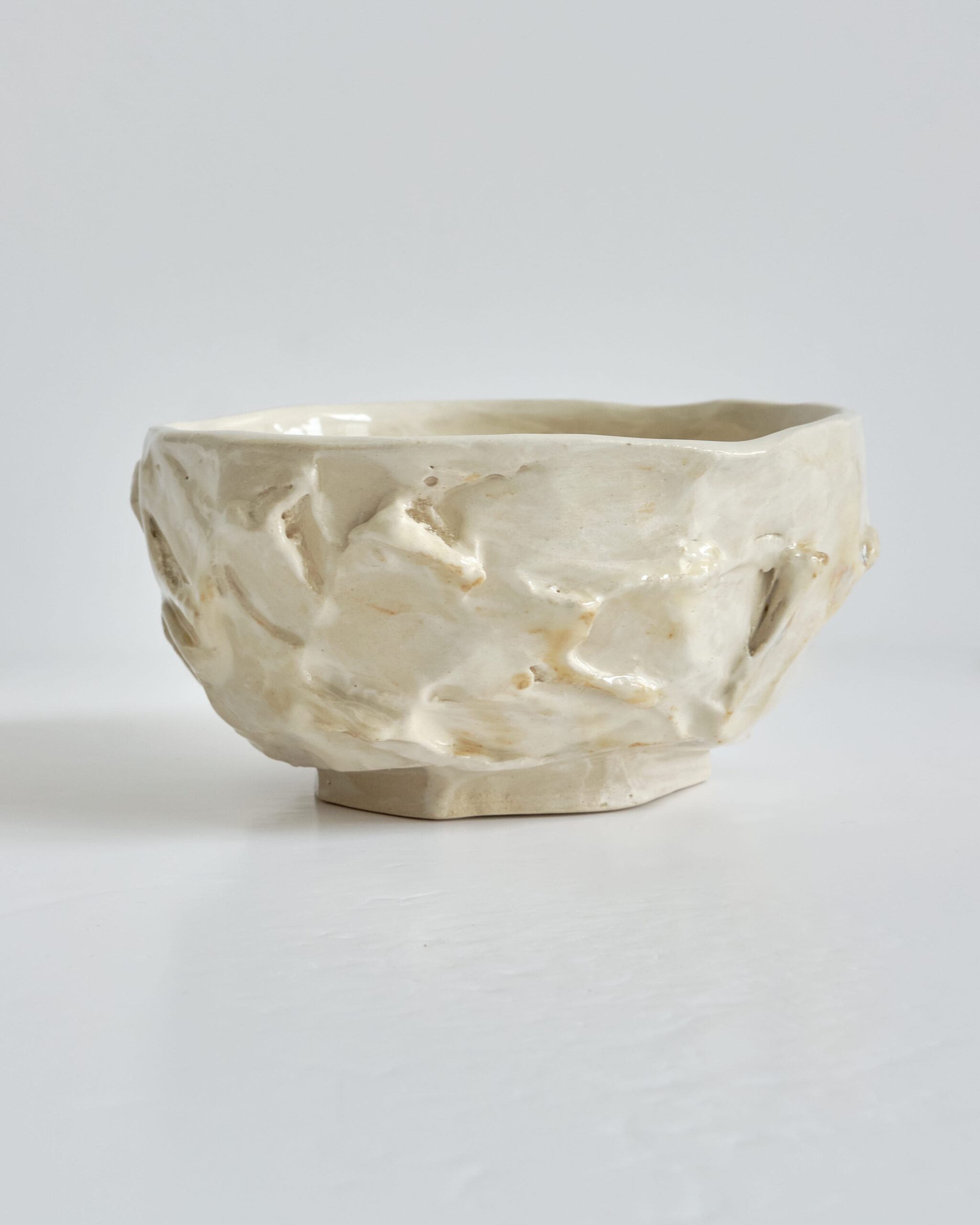
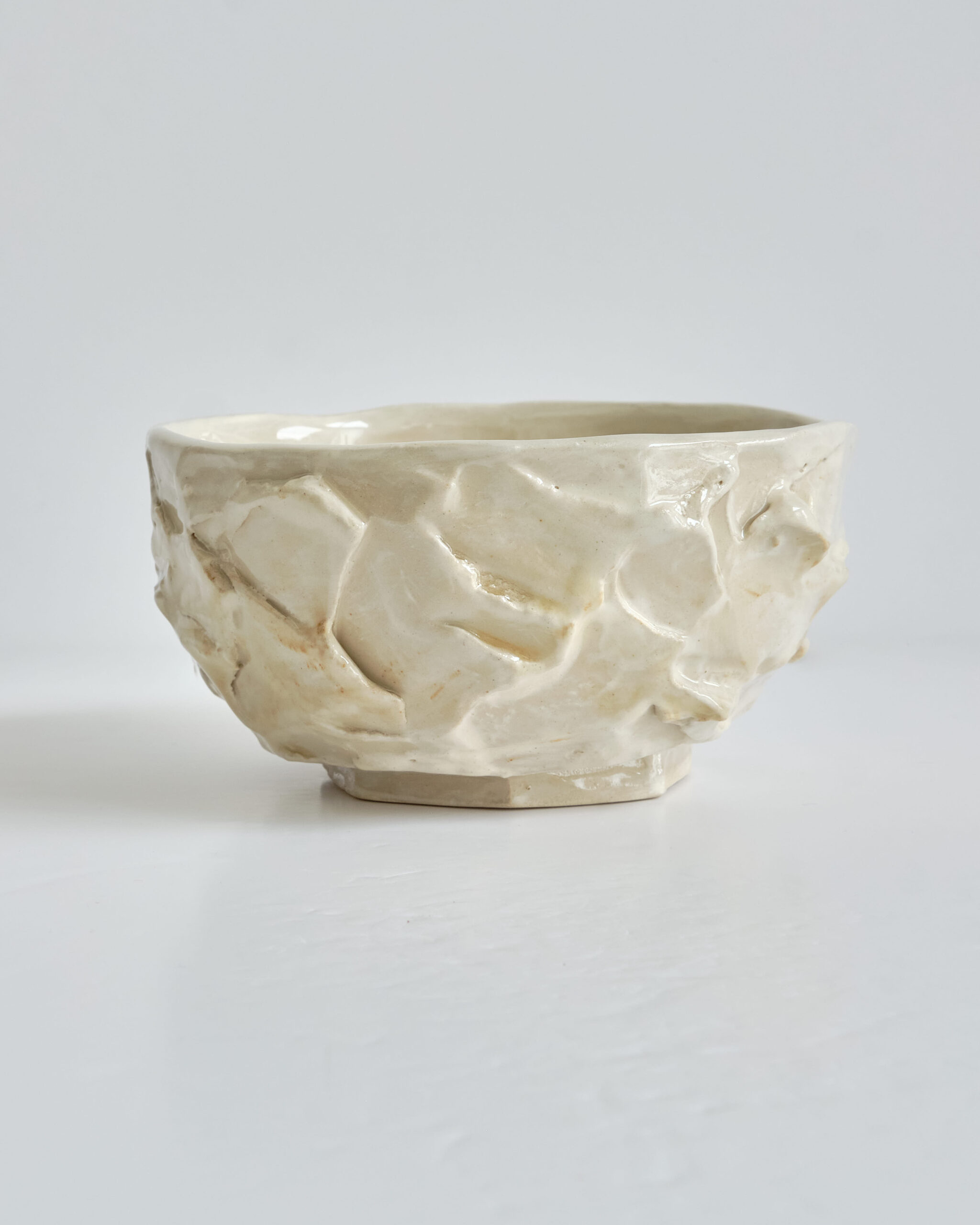
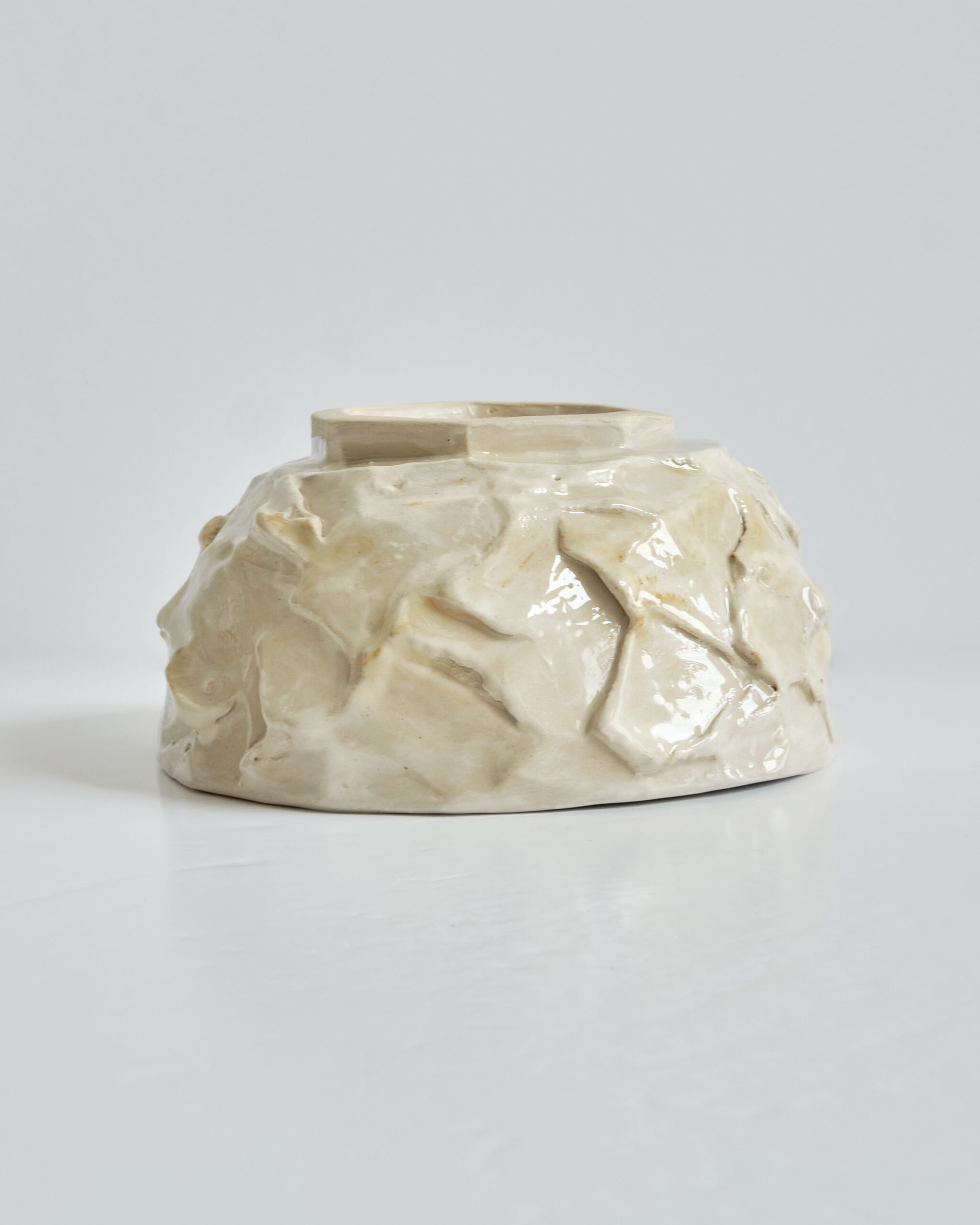
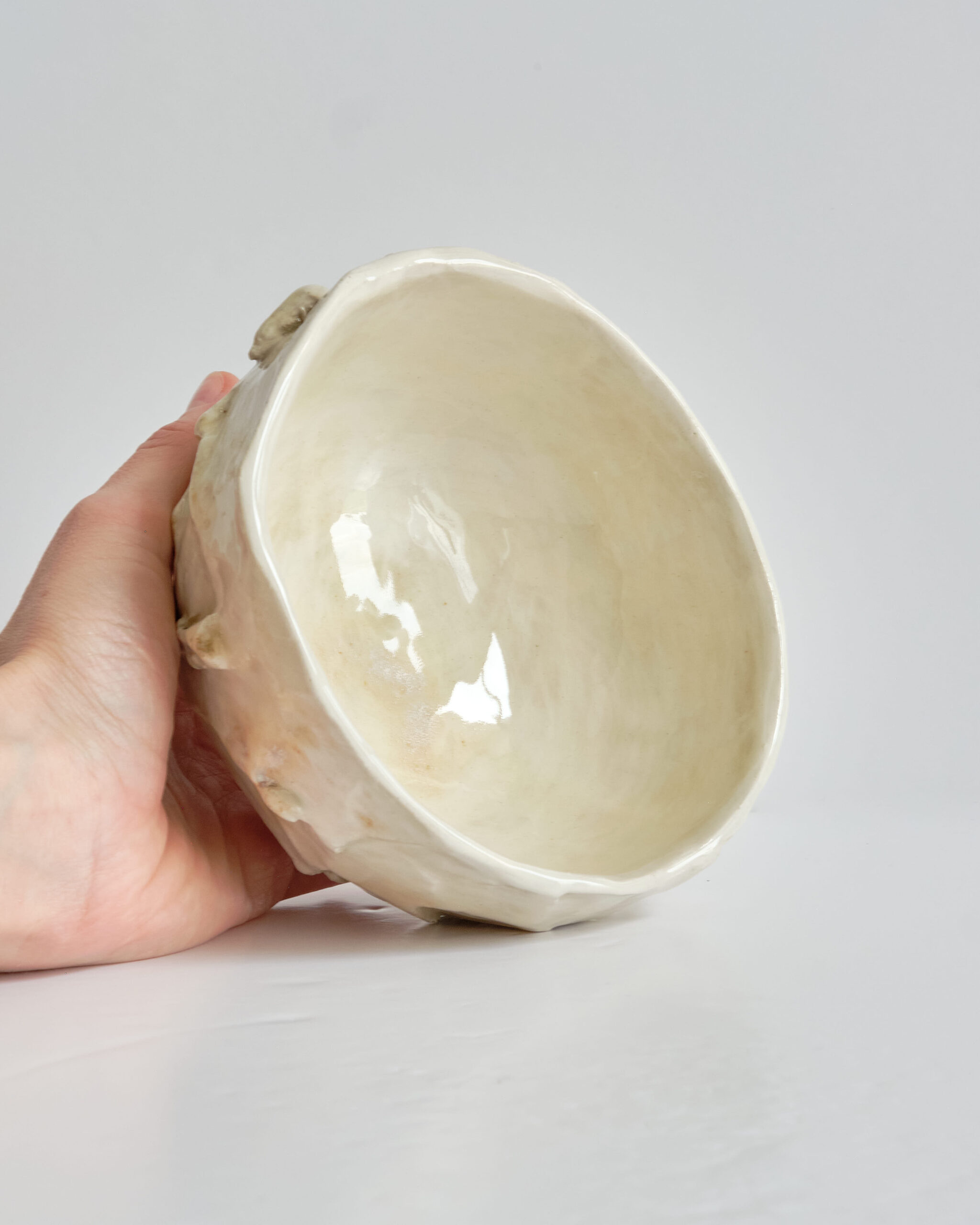
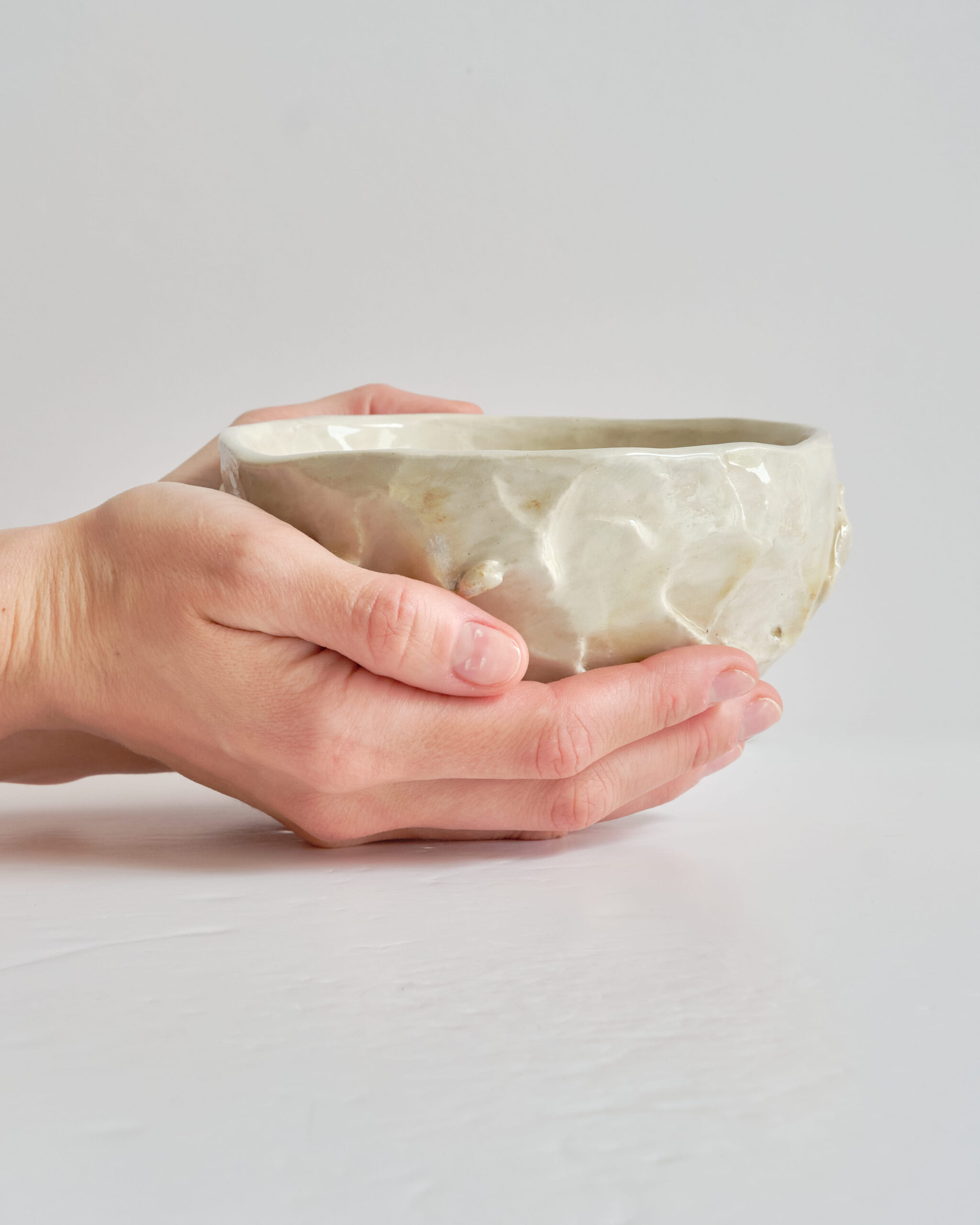
Shipping calculated at checkout.Kurinuki Matcha Bowl Nº22 is a hand-carved, sculptural ceramic bowl crafted using the Japanese kurinuki technique. Carved from a beige stoneware, it has a sculptural presence that gives it a satisfying weight in the hands. The shape is finished with layers of off-white slip and a glossy transparent glaze. The varying depths of the carving combined with the finish creates subtle shading across the surface, giving the piece a quiet depth.
Inspired by traditional matcha bowls, it is designed for both whisking and drinking (without a spout), inviting a moment of pause — to observe its textures, decoration, and form, and to settle into presence before the first sip.
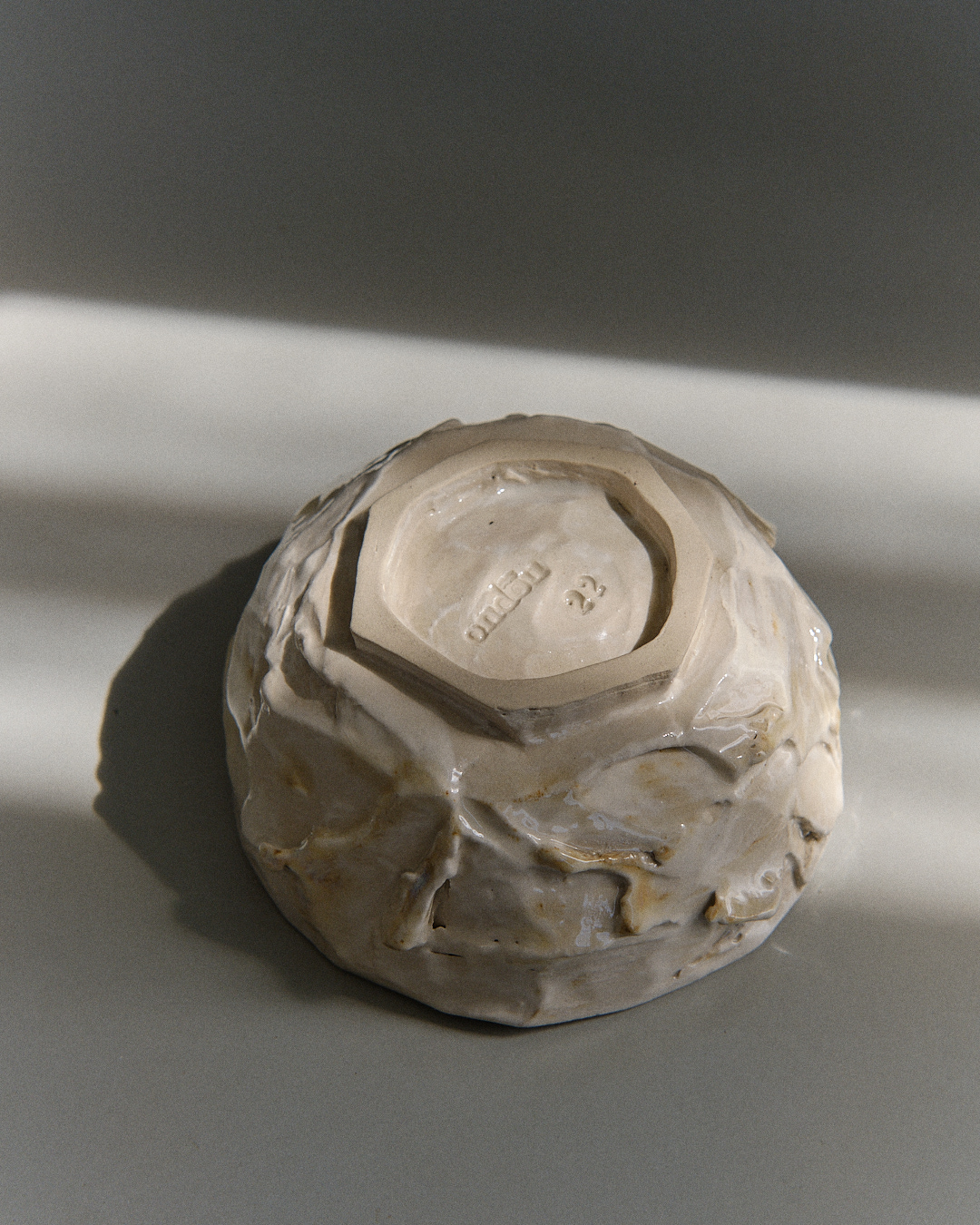
It is marked on the base with its design number.
What is kurinuki? Unlike other pottery techniques— where forms are built up from nothing — kurinuki begins with a solid block of clay. The bowl is slowly carved from a single mass of stoneware until the form reveals itself. This intuitive process creates textured, sculptural surfaces and organic asymmetry, as the material and hands guide its character.
A one-of-a-kind piece — this bowl is made as a single item and is not restocked after it is sold. However, while it cannot be reproduced in an exact manner, custom orders for a similar piece can be discussed via email.
Availability: In stock
You may also like…
-
Kurinuki Matcha Bowl Nº24
€120.00 -
Kurinuki Matcha Bowl Nº21
€120.00 -
KURINUKI CUP Nº15
€60.00 -
Kurinuki Matcha Bowl Nº23
€120.00 -
KURINUKI CUP Nº14
€60.00 -
KURINUKI CUP Nº2
€60.00
Related products
-
Kurinuki Matcha Bowl Nº11
€120.00 -
Kurinuki Matcha Bowl Nº17
€120.00